Where to Buy Authentic Lederhosen: The Complete Buyer's Guide

Oktoberfest has grown into a genuinely global celebration, with events now held on nearly every continent — from Munich's original Wiesn to festivals in the United States, Canada, the UK, and Australia. As that popularity has spread, so has demand for authentic Lederhosen. Unfortunately, that same demand has created a flood of costume-quality imitations marketed alongside the real thing, making it genuinely difficult for first-time buyers to tell authentic Bavarian craftsmanship from a cheap synthetic knockoff.
The difference matters more than most buyers realize going in. Authentic Lederhosen are handcrafted from genuine leather, built with traditional embroidery and construction techniques passed down through generations of Bavarian and Austrian artisans. Costume Lederhosen, by contrast, are typically mass-produced from synthetic materials designed to look the part for a single wear rather than perform like a real heritage garment.
This guide will walk you through exactly what makes Lederhosen authentic, the telltale signs that separate genuine craftsmanship from costume-quality imitations, where you can realistically shop for real Lederhosen — whether that's specialized retailers, Bavarian brands, or trusted online stores — and how to avoid getting fooled by fakes. Along the way, you'll find practical buying advice on materials, sizing, pricing, and care, whether you're shopping from the USA, Canada, the UK, Australia, or planning to buy while traveling in Germany itself.
At Trendy Tannery, we've built our entire Lederhosen collection around genuine leather and authentic Bavarian craftsmanship, so this guide reflects exactly what we look for ourselves when sourcing real heritage garments.
What Is Authentic Lederhosen?
Authentic Lederhosen are traditional Bavarian clothing — leather shorts or knee-length trousers with a distinctive front flap (Hosenlatz), suspenders, and decorative embroidery, originally developed as durable workwear for farmers, hunters, and Alpine laborers. What makes a pair genuinely authentic isn't just the silhouette, but the construction behind it.
Genuine leather construction is the foundation: real cowhide, goatskin, deerskin, or buffalo leather rather than synthetic imitations. Handmade craftsmanship matters just as much, since traditional Lederhosen are typically cut, stitched, and finished by skilled artisans rather than mass-produced on an assembly line. Traditional embroidery — often depicting regional Alpine motifs like oak leaves or edelweiss — adds both decoration and cultural meaning, frequently reflecting the wearer's home region or personal history.
That cultural significance is a real part of what authentic Lederhosen represent. They're not a costume; they're a genuine piece of Bavarian and Austrian heritage, historically declared the official Oktoberfest attire for men in 1887 and worn continuously since. That's also exactly why authentic pieces last for decades rather than one festival season — real leather, properly made, is built to age and improve with wear, not fall apart after a single Oktoberfest.
Why Buying Authentic Lederhosen Matters
The gap between authentic and costume-quality Lederhosen shows up almost immediately in how they perform. Genuine leather offers far better durability, holding up to years of regular festival wear where synthetic alternatives crack, peel, or tear within a season or two. That same real leather also delivers superior comfort — it softens and molds to your body over time, creating a custom fit that synthetic materials simply can't replicate.
Authentic appearance is another real difference. Genuine leather has a natural texture, grain, and sheen that's genuinely difficult to fake convincingly, while costume versions often look noticeably plastic or overly uniform up close. That authenticity pays off in long-term value too: a well-made pair of Lederhosen, properly cared for, can become a genuine investment piece rather than something you replace every year or two.
Higher quality leather and better stitching go hand in hand with authentic construction, since real artisans building genuine Lederhosen use reinforced seams and proper traditional techniques designed to handle the physical demands of dancing, walking, and sitting throughout a long festival day. That proper traditional design — the correct cut, the functional Hosenlatz, the right embroidery placement — is exactly what makes authentic Lederhosen genuinely suitable for Oktoberfest, rather than something that merely looks the part in photos.
Signs of Authentic Lederhosen
Genuine Leather
Real Lederhosen use actual animal hide — cowhide, goatskin, deerskin, or buffalo leather — with a natural grain and texture that feels distinctly different from synthetic materials. Genuine leather should feel supple but substantial, never plasticky or stiff in an artificial way.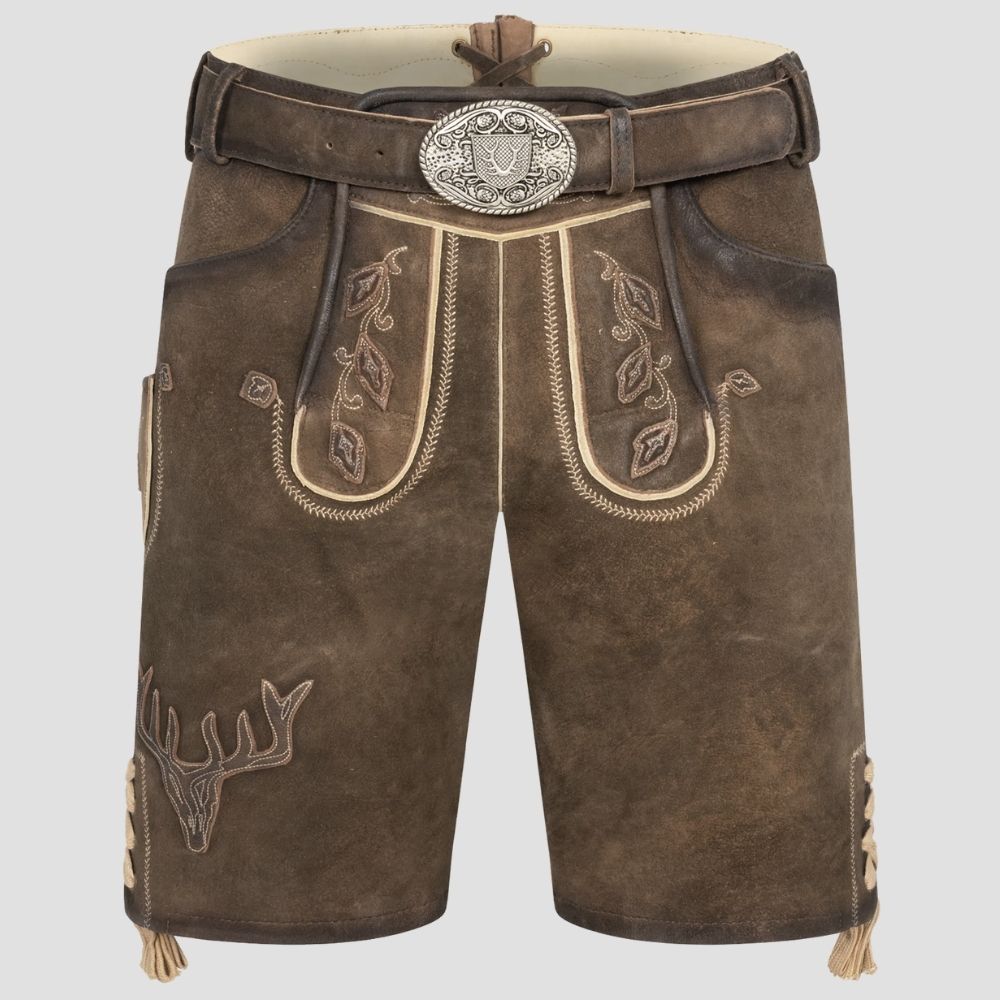
Traditional Bavarian Embroidery
Authentic embroidery is detailed, symmetrical, and typically features recognizable Alpine motifs like oak leaves, deer, or floral patterns. It should look hand-finished rather than machine-printed or glued on.
Handmade Construction
Genuine Lederhosen show subtle variations that indicate human craftsmanship — slight, natural irregularities in stitching or embroidery placement that distinguish handmade work from mass-produced uniformity.
Strong Stitching
Look for reinforced, even stitching along stress points like the seat, seams, and waistband. Loose threads or uneven stitching are red flags for lower-quality construction.
Quality Buttons
Authentic Lederhosen typically use real stag-horn or high-quality metal buttons, not cheap plastic. These should feel solid and substantial, not lightweight or hollow.
Adjustable Suspenders
Traditional Lederhosen include suspenders with genuine leather or embroidered detailing and functional adjustment points, not just decorative straps.
Traditional Knife Pocket
Many authentic styles include a small side pocket, historically designed to hold a knife — a detail that's often missing on costume versions built purely for appearance.
Premium Hardware
Buckles, rivets, and lacing should be sturdy metal rather than lightweight plastic, since these components need to hold up to real, repeated wear.
Natural Leather Texture
Genuine leather has visible grain, subtle color variation, and a texture that changes slightly across the hide — uniformity that's too perfect is often a sign of synthetic material.
Proper Fit
Authentic Lederhosen are cut for a "snug" break-in fit, designed to be slightly firm when new and to soften and mold to your body over time — a fit philosophy costume versions rarely replicate correctly.
Where Can You Buy Authentic Lederhosen?
Specialized Lederhosen Stores
Retailers that focus specifically on Trachten and Lederhosen typically offer better product knowledge, more authentic construction, and staff who genuinely understand traditional sizing and craftsmanship — a real advantage over general costume shops carrying Lederhosen as one of many seasonal items.
Authentic German Brands
Brands with real roots in Bavaria or Austria are trusted for an obvious reason: proximity to the actual tradition. These brands often work directly with artisans trained in traditional techniques, which shows in the quality and authenticity of the final product.
Premium Online Retailers
Online shopping has real benefits for authentic Lederhosen: broader size ranges, worldwide shipping, and the ability to compare materials and construction details before buying. The tradeoff is that you need a retailer you can trust to accurately represent genuine leather and craftsmanship, since you can't handle the product before ordering.
Local Bavarian Shops
If you're traveling to Germany, shopping directly in Bavaria — particularly Munich — is often the best option for handling genuine pieces in person and finding regional variations you won't see elsewhere.
Oktoberfest Markets
Festival markets can offer genuine finds, but they're a mixed bag — the same crowds that attract legitimate sellers also attract vendors pushing costume-quality imitations at festival prices. Careful inspection matters even more in this setting.
Custom Leather Makers
Made-to-measure Lederhosen from a custom leatherworker offer the most personalized fit and the ability to select your exact leather type and embroidery — a premium option for genuine enthusiasts and collectors willing to invest in a truly bespoke piece.
Best Places to Buy Lederhosen Online
When evaluating where to buy Lederhosen online, a few factors genuinely separate trustworthy retailers from the rest. Product variety matters — a retailer offering multiple leather types, lengths, and embroidery styles signals real category expertise rather than a single generic import. Worldwide shipping is essential if you're ordering from the USA, Canada, the UK, or Australia, since not every retailer ships internationally or handles customs smoothly.
Size availability is another real differentiator; authentic Lederhosen sizing runs differently than standard denim sizing, so a retailer offering a genuinely broad size range (rather than just a handful of standard cuts) is more likely to fit real body types accurately. Customer reviews give you a window into real buyer experiences with fit, quality, and durability — look for reviews that specifically mention leather quality and construction, not just generic praise.
A clear return policy protects you if sizing or fit doesn't work out, which matters more with leather than with typical clothing since alterations are more complex. Responsive customer support and secure checkout round out what a trustworthy online Lederhosen retailer should offer.
At Trendy Tannery, our Lederhosen collection is built around exactly these standards — genuine leather across multiple styles and leather types, a full size range, worldwide shipping, secure checkout, and real customer support for sizing questions, so you can order online with the same confidence you'd have shopping in person.
How to Avoid Fake Lederhosen
Faux leather is the single biggest red flag — if a listing doesn't clearly specify genuine leather (and name the specific type), assume it's synthetic. Cheap embroidery that looks printed, glued, or overly uniform rather than hand-stitched is another clear warning sign. Thin material that feels flimsy or lightweight when you'd expect substantial leather usually indicates a lower-quality synthetic blend.
Poor stitching — loose threads, uneven seams, or visible machine-only construction with no hand-finishing — signals mass-produced costume quality. Unrealistically low prices are one of the most reliable warning signs of all: genuine leather and authentic craftsmanship simply cost more to produce, so a price that seems too good to be true almost always is. Missing product information, like vague or absent details about leather type, origin, or construction, should raise real questions about what you're actually buying.
No return policy is a serious red flag for any leather purchase, since it suggests the seller isn't confident enough in their product to stand behind it. Finally, watch for fake reviews — overly generic, repetitive, or suspiciously uniform review patterns are a common sign of a listing designed to look more trustworthy than the product actually is.
Genuine Leather vs. Faux Leather Lederhosen
| Feature | Genuine Leather | Faux Leather |
|---|---|---|
| Material | Real animal hide (cowhide, goatskin, deerskin, buffalo) | Synthetic polyurethane or PVC-based material |
| Durability | Excellent, lasts decades with care | Moderate, typically breaks down within 1-2 seasons |
| Comfort | Molds to your body over time | Stays stiff, doesn't break in |
| Appearance | Natural grain and texture | Often uniform, plastic-looking |
| Lifespan | Decades with proper care | A few years at most |
| Price | Higher upfront investment | Lower upfront cost |
| Maintenance | Requires conditioning and proper care | Minimal maintenance, but doesn't age well regardless |
Which Leather Is Best?
Goatskin offers a strong balance of durability and flexibility, with a distinctly soft, pliable texture that makes it comfortable for long festival days without feeling overly heavy.
Deer leather is the premium choice among traditional Lederhosen materials — exceptionally soft, naturally grained, and offering a "second-skin" comfort level that improves the more you wear it, making it a favorite among collectors and serious enthusiasts.
Cowhide is the most robust and long-lasting option, nearly indestructible under normal wear, and a strong choice for anyone who wants a pair that holds its shape and structure for years of regular use.
Buffalo leather brings a rugged, deeply grained texture with excellent durability, well-suited to a more rustic, antique aesthetic and heavy festival use.
Suede leather offers a lighter, more flexible feel with a distinctly velvety texture, making it a good entry point for buyers who want genuine leather without the weight of thicker hides.
Types of Authentic Lederhosen
- Classic Lederhosen — the traditional silhouette, balancing authenticity with everyday wearability
- Short Lederhosen — ending above the knee, ideal for warm-weather festival days
- Knee-Length Lederhosen — a more formal length suited to weddings and cultural events
- Bundhosen — the traditional knee-length term used specifically in parts of Bavaria and Austria
- Vintage Lederhosen — featuring a pre-aged, weathered finish for instant heritage character
- Rustic Lederhosen — specialized leather treatments for a lived-in, antique aesthetic
- Embroidered Lederhosen — showcasing intricate, high-contrast traditional stitching
- Modern Lederhosen — sleeker cuts with toned-down ornamentation for contemporary wear
- Traditional Bavarian Lederhosen — the most historically accurate regional styling
- Festival Lederhosen — designed specifically with all-day Oktoberfest comfort in mind
How to Choose the Right Lederhosen
- Leather type — cowhide for maximum durability, deerskin for premium comfort, goatskin or suede for a lighter feel
- Size — always use a proper measuring tape rather than relying on your regular clothing size
- Fit — expect a snug initial fit that will soften and mold with wear
- Length — short for maximum mobility, knee-length for a more formal, traditional look
- Color — traditional browns for authentic style, black or gray for a more modern take
- Embroidery — minimal detailing for understated style, bold traditional embroidery for full festival authenticity
- Budget — decide your investment level based on how often you'll realistically wear them
- Purpose — Oktoberfest, cultural events, or everyday heritage wear all suit slightly different styles
Common Buying Mistakes
- Buying synthetic leather without realizing it, due to vague or misleading product descriptions
- Ignoring measurements and relying on standard clothing sizes, which don't translate accurately to leather sizing
- Choosing the wrong length for the occasion — short styles for formal events, or knee-length for a hot festival day
- Buying extremely cheap products that seem like a bargain but rarely hold up beyond a single wear
- Ignoring reviews, especially ones that specifically mention leather quality and true-to-size fit
- Ignoring leather quality details in the product description, or not asking when they're unclear
- Not checking the return policy, which matters more for leather than typical clothing given the cost involved
Price Guide
- Entry-Level: Quality genuine leather Lederhosen with classic styling — a solid, authentic starting point for first-time buyers.
- Mid-Range: Premium leather with detailed embroidery, stronger hardware, and superior tailored construction.
- Premium Handmade: Full-grain or deerskin leather, handcrafted by skilled artisans, with heirloom-quality detailing built to last a lifetime.
(Note: this brief specified adding actual prices later — update with real figures matching your current product pricing before publishing.)
Best Colors
- Brown — the definitive traditional choice, pairs with almost any Trachten shirt
- Dark Brown — a deeper, more formal variation on classic brown
- Black — a sleek, contemporary alternative increasingly popular for modern styling
- Gray — a sophisticated, understated option that still reads as traditional
- Olive — nods to the hunting and mountaineering roots of Trachten attire
- Rustic Antique Finish — a weathered look that gives new Lederhosen instant vintage character
Size Guide
Waist — measure around your natural waistline where you'd normally wear trousers, keeping the tape snug but not tight, and never rely on your regular jeans size as a reference.
Hip — measure around the widest part of your hips to ensure the seat and rise fit properly without restricting movement.
Length — measure from your waist down to where you want the hem to fall, based on whether you're choosing short or knee-length styles.
Fit advice — expect a firm, snug fit when new; this is intentional, not a sizing error.
Leather stretching — genuine leather naturally expands and molds to your body shape after a few hours of wear, so sizing slightly snug is the correct approach rather than sizing up for immediate comfort.
How Should Authentic Lederhosen Fit?
Waist fit should feel firm but not painfully tight when you first put them on — leather will loosen with wear, so what feels snug on day one becomes comfortable within a few hours of use. Leg fit should allow full range of motion for walking, dancing, and sitting without restriction, even though the fit around the thigh will initially feel structured. The seat should sit close without pulling or gaping when you move.
Suspenders play a real functional role, not just a decorative one — they should hold the Lederhosen at the correct waist position throughout a long day of movement. The break-in period is a genuine part of the experience: expect your first few wears to feel noticeably firmer than they will after the leather has properly softened and adapted to your body.
Best Occasions to Wear Authentic Lederhosen
Oktoberfest remains the definitive occasion, but authentic Lederhosen are equally suited to German festivals, beer festivals, and folk festivals more broadly. Cultural events and traditional weddings call for a more polished, knee-length style, while theme parties give more casual or rustic styles room to shine. Travel to Bavaria is a natural occasion to wear genuine Lederhosen, connecting you with local tradition rather than standing out as a tourist in costume gear. Photoshoots round out the list, since the timeless aesthetic of authentic Lederhosen photographs far better than synthetic alternatives.
Best Seasons to Buy Lederhosen
Summer
Prepare early for Oktoberfest by shopping before the fall rush, when selection is at its widest and shipping times are shortest.
Late Summer
This is typically when retailers carry their largest selection, right before the pre-festival demand surge begins.
Early Fall
Peak Oktoberfest shopping season — expect faster sellouts on popular sizes and styles, so buying early in this window is safer than waiting.
Winter Sales
A good opportunity for discounts once festival season has passed, especially for buyers planning ahead for next year.
Spring
Ideal for planning ahead, particularly for custom or made-to-measure pieces that require more production lead time.
How to Care for Authentic Lederhosen
Leather cleaning should be limited to gentle spot cleaning with a slightly damp cloth and mild, leather-specific soap — never soak or fully wet genuine leather. Conditioning with a quality leather conditioner or specialized "Lederbalsam" every few months keeps the material supple and prevents cracking. Storage should be on a sturdy, wide hanger in a cool, dry place, avoiding plastic bags that trap moisture.
Drying should always happen naturally, away from direct heat sources like radiators or hair dryers, which can make leather stiff and brittle. Avoid machine washing entirely — genuine leather should never go through a washing machine. For deeper stains or long-term maintenance, professional cleaning from a leather specialist is worth the investment to protect a genuine, long-term piece.
How Long Do Authentic Lederhosen Last?
With proper care, authentic Lederhosen can genuinely last for decades — often becoming family heirlooms passed down across generations rather than replaced every few years. That longevity comes directly from genuine leather's natural aging process: rather than wearing out, real leather develops character and a richer patina over time, actually improving in appearance the more it's worn.
That durability is exactly why authentic Lederhosen offer better long-term value than cheap alternatives, even at a higher upfront cost. A synthetic pair that needs replacing every one or two seasons can easily cost more over a decade than a single well-made, genuine pair that lasts the whole time.
Why Authentic Lederhosen Cost More
Premium leather itself costs significantly more to source and process than synthetic materials, and that cost is reflected directly in the final price. Handmade embroidery adds real labor and skill to each piece, since detailed traditional stitching simply can't be replicated by a machine at the same quality level. Traditional craftsmanship more broadly — proper tailoring, reinforced seams, correct construction techniques — requires trained artisans rather than assembly-line production.
Durability is part of what you're paying for as well; genuine leather Lederhosen are built to survive years of hard use, which costs more upfront but saves money over the long run. Small-batch production, common among authentic Lederhosen makers, also tends to cost more per unit than the mass manufacturing used for costume-quality imitations, but it's exactly what makes each piece more carefully made.
Why Buy from Trendy Tannery?
- Premium genuine leather in every pair
- Traditional craftsmanship rooted in authentic Bavarian technique
- Quality inspection on every garment before shipping
- Worldwide shipping to the USA, Canada, the UK, Australia, and beyond
- Secure checkout — encrypted payment to protect your details
- Excellent customer support for sizing help and buying questions
- Wide size range to fit different body types accurately
- Competitive pricing across entry-level, mid-range, and premium tiers
Shop with Confidence
- Secure payment — encrypted checkout protecting your personal and payment information
- Worldwide delivery — reliable, tracked shipping wherever you're ordering from
- Easy returns — a straightforward process if sizing or style isn't quite right
- Size assistance — real guidance to help you choose the correct fit
- Customer support — responsive help with questions before and after your purchase
- Premium quality guarantee — genuine leather and authentic craftsmanship in every order
Buy Authentic Lederhosen with Confidence
Looking for genuine Lederhosen that combine authentic Bavarian craftsmanship with premium quality? Explore Trendy Tannery's collection of genuine leather Lederhosen, handcrafted for comfort, durability, and timeless Oktoberfest style. Whether you're attending Oktoberfest, a German festival, or simply want authentic traditional clothing, you'll find the perfect pair in our collection.
👉 Shop Authentic Lederhosen Today
Frequently Asked Questions
Q: Where can I buy authentic Lederhosen?
A: Authentic Lederhosen are available from specialized Trachten retailers, trusted German brands, premium online stores like Trendy Tannery, local shops in Bavaria, and custom leather makers.
Q: How do I know if Lederhosen are genuine?
A: Check for genuine leather texture, hand-finished embroidery, strong reinforced stitching, quality horn or metal buttons, and a clear, specific description of the leather type used.
Q: Is genuine leather better?
A: Yes, genuine leather offers far greater durability, comfort, and authentic appearance compared to synthetic alternatives, which tend to crack and wear out quickly.
Q: Which leather is best?
A: Deerskin offers the most premium comfort, cowhide the most durability, and goatskin or suede a lighter, more affordable option — the best choice depends on your priorities.
Q: How much do authentic Lederhosen cost?
A: Prices vary by leather type and craftsmanship, generally ranging from an accessible entry-level tier up to premium handmade pieces using deerskin or full-grain leather.
Q: Are authentic Lederhosen worth it?
A: Yes, especially considering their lifespan — a genuine pair can last decades, often outperforming the total cost of replacing cheaper alternatives repeatedly.
Q: How long do Lederhosen last?
A: With proper care, authentic Lederhosen can last for decades, developing character and often becoming genuine family heirlooms.
Q: Can tourists wear Lederhosen?
A: Yes, tourists are welcome to wear authentic Lederhosen at Oktoberfest and other festivals — choosing genuine, well-made pieces over cheap costumes is generally seen as a sign of respect for the tradition.
Q: What size should I buy?
A: Use your actual waist and hip measurements rather than your regular clothing size, and expect a snug initial fit that will soften with wear.
Q: Do Lederhosen stretch?
A: Yes, genuine leather naturally stretches and molds to your body shape after a few hours of wear.
Q: Are Lederhosen comfortable?
A: Yes, especially once broken in — genuine leather becomes more comfortable the more you wear it, unlike synthetic alternatives that stay stiff.
Q: Can I wear Lederhosen without suspenders?
A: While suspenders are traditional and functional, some modern styles can be worn with a belt, though suspenders remain the most authentic choice.
Q: What shoes go with Lederhosen?
A: Haferl shoes are the traditional choice, though leather boots also pair well for a more rugged look.
Q: How do I clean Lederhosen?
A: Spot clean with a damp cloth and mild leather soap, condition regularly, and avoid machine washing or soaking.
Q: Can Lederhosen get wet?
A: Light moisture is generally fine, but genuine leather should be dried naturally and not soaked or exposed to heavy, prolonged rain.
Q: Are handmade Lederhosen better?
A: Generally yes — handmade construction typically means better attention to detail, stronger stitching, and more authentic traditional technique than mass-produced alternatives.
Q: Which color is most traditional?
A: Brown remains the most traditional and versatile color for authentic Lederhosen.
Q: Can women wear Lederhosen?
A: Yes, women's Lederhosen have become increasingly popular, offering an authentic and versatile alternative to the traditional dirndl.
Q: What accessories should I buy?
A: A Trachten shirt, suspenders, Haferl shoes, and a traditional hat complete an authentic Lederhosen outfit.
Q: Why choose Trendy Tannery?
A: Because every pair combines genuine leather, authentic Bavarian craftsmanship, and reliable sizing support, backed by worldwide shipping and secure checkout.


