What Should I Wear to Oktoberfest? Complete Guide

Oktoberfest is the world's largest folk festival, drawing more than six million visitors to Munich every year — and a growing number of Oktoberfest-style celebrations across the United States. If this is your first time going, one question probably keeps coming up: what should you actually wear?
The short answer is that traditional Bavarian clothing — lederhosen for men and dirndls for women — is the go-to choice, and it's absolutely welcomed for tourists and first-timers, not just locals. You don't need German heritage or a special invitation to wear it. In fact, showing up in traditional attire is part of what makes the festival feel authentic, and it's how most attendees, local and visiting, choose to dress.
That said, "traditional" doesn't mean "uncomfortable" or "one-size-fits-all." There's real variation in how people put together their look, from budget-friendly basics to premium leather lederhosen with hand-stitched embroidery. Weather, comfort, and how long you'll be on your feet in a crowded beer tent all matter just as much as style.
This guide walks through exactly what to wear, piece by piece, for men, women, and kids — plus what to avoid, how to dress for changing weather, and how to build a complete outfit whether you're starting from scratch or already have a few pieces. Along the way, we'll point you toward the specific items in our Trendy Tannery Oktoberfest collection that make dressing for the festival simple.
What Is the Traditional Oktoberfest Dress Code?
There is no official, enforced dress code at Oktoberfest, but traditional Bavarian clothing — known as Tracht — is the cultural norm. Most attendees wear lederhosen or dirndls, and tents generally welcome guests in either traditional or smart-casual clothing.
Why Traditional Clothing Is Recommended
Wearing Tracht isn't about costume — it's about participating in a 200-year-old cultural tradition. Practically speaking, it also tends to be more comfortable for a long day of standing, dancing, and sitting on beer hall benches than restrictive fashion clothing.
Is Traditional Clothing Required?
No. You can attend Oktoberfest in regular clothes. However, most tents lean festive, and you'll notice that the overwhelming majority of attendees — including tourists — dress in lederhosen or dirndls. Skipping it won't get you turned away, but it will make you stand out.
Can Tourists Wear Lederhosen and Dirndls?
Yes. Tourists are not only allowed to wear traditional Bavarian clothing, they're encouraged to. Munich's tourism board and festival organizers actively welcome visitors who dress in Tracht as a sign of respect for local culture, not appropriation. The one line to be careful of is cheap "costume" versions sold as Halloween gear — more on that below.
What Should Men Wear to Oktoberfest?
A men's Oktoberfest outfit typically includes lederhosen, a checkered Bavarian shirt, a trachten vest or jacket, knee-high socks (Loferl), sturdy leather shoes (Haferl), and a leather belt or suspenders.
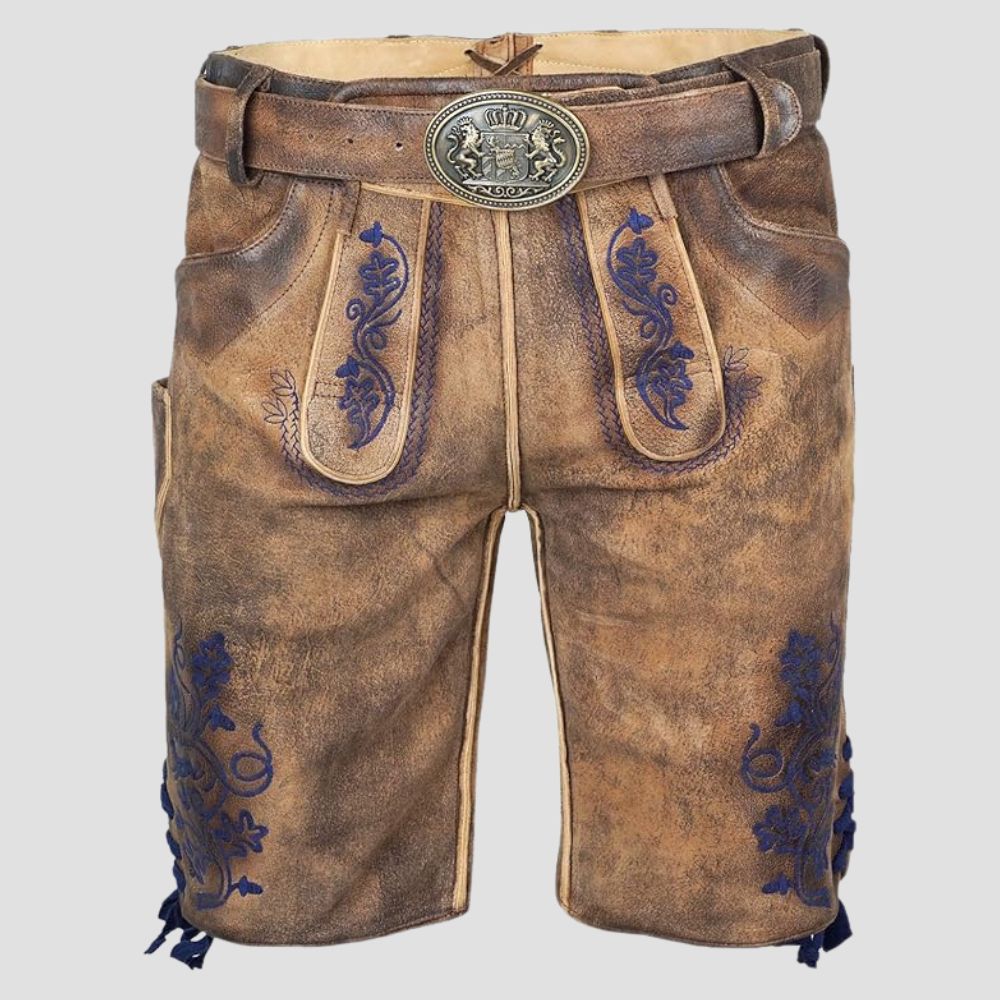
Lederhosen
Lederhosen (literally "leather trousers") are the foundation of a men's outfit. They come in knee-length and short styles, typically in brown, black, or tan leather, often with embroidered detailing on the front flap and side seams.
Bavarian Shirt
A checkered or plaid button-down shirt worn underneath the lederhosen. Blue and white checks are the most traditional, though red, green, and other colors are common too.
 Trachten Vest
A vest adds a layer of formality and warmth. Traditional trachten vests are often made of wool or loden fabric with decorative buttons.
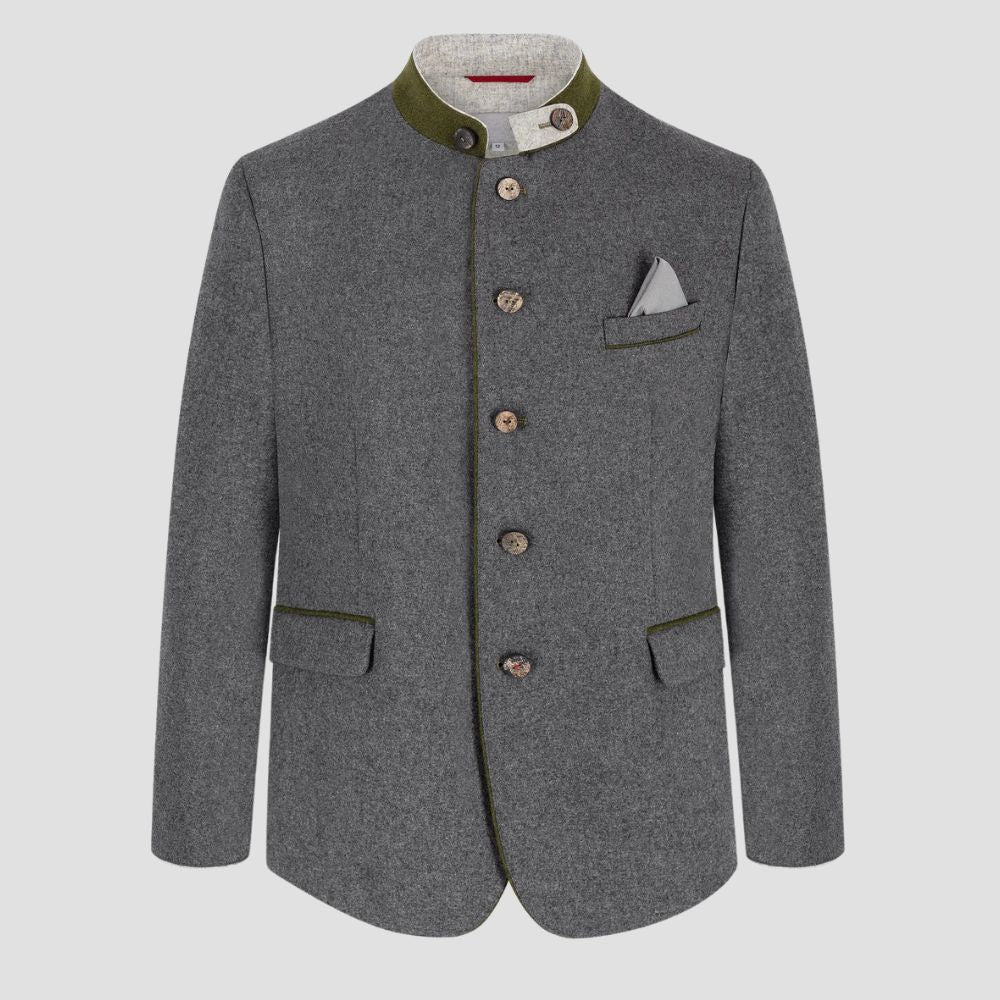
Trachten Jacket
For cooler evenings, a trachten jacket (usually gray or green wool with contrasting trim) works over the shirt and vest, and is easy to remove as the tent heats up.
Loferl Socks
These are the distinctive knee-high wool socks, often with a folded cuff, worn with knee-length lederhosen.
Haferl Shoes
Sturdy, low-heeled leather shoes designed for standing and walking comfortably for hours. They're the traditional footwear choice and hold up far better than sneakers or dress shoes on a long festival day.
Bavarian Hat
A felt hat, often with a feather or brush pin (Gamsbart), is a classic finishing touch — optional, but a popular one.
Belt or Suspenders
Wide leather belts or embroidered suspenders (Hosenträger) both work with lederhosen. Suspenders are more traditional; a belt is a simpler, more modern alternative.
Accessories
A charivari (decorative chain with small charms) worn on the vest, a pocket watch, or a simple neck scarf can round out the look without overdoing it.
What Should Women Wear to Oktoberfest?
A women's Oktoberfest outfit centers on the dirndl — a fitted bodice dress with a blouse, apron, and often a cardigan or jacket layer — paired with comfortable shoes.
Dirndl
The dirndl is a fitted dress with a bodice, full skirt, and apron. Lengths vary from knee-length to floor-length, and colors range from classic florals to solid jewel tones.
Dirndl Blouse
Worn underneath the bodice, usually with puffed short sleeves and a scoop or square neckline.
Aprn
The apron isn't just decorative — it's part of the traditional silhouette, and its bow placement has become a bit of festival folklore (bow on the left = single, right = taken, center-front = virgin, center-back = widowed or a child). It's playful, not a hard rule.
Cardigan or Trachten Jacket
Beer tents get warm, but walking to and from the festival grounds — especially in the evening — can be chilly. A light cardigan or fitted trachten jacket bridges that gap.
Comfortable Shoes
Ballet flats, low block heels, or leather Mary Janes are the most practical choices. You'll be on cobblestones and standing for hours.
Traditional Jewelry
Simple pieces — a charm necklace, small earrings, or a decorative hair clip — complement the dirndl without competing with it.
Hairstyles
Braids (single, double, or crown braids) are the most traditional hairstyle pairing, though any style that stays neat through a long day works fine.
 What Should Children Wear to Oktoberfest?
Children typically wear scaled-down versions of adult Tracht — lederhosen and suspenders for boys, dirndls for girls — prioritizing comfort and easy movement over exact formality.
Boys
Simple lederhosen shorts, a plain or checkered shirt, and comfortable sneakers or leather shoes work well. Skip stiff jackets that restrict movement for active kids.
Girls
A shorter, simpler dirndl with a soft blouse and flat shoes lets kids move freely while still looking festive.
Family Matching Outfits
Coordinating colors (not identical outfits) across the family — like everyone in shades of green or blue — photographs well without looking costume-y.
Traditional vs. Modern Oktoberfest Outfits
Not everyone wants to buy a full traditional outfit, and that's fine. Here's how traditional and modern approaches compare:
|
Traditional |
Modern Alternative |
Best For |
|
Lederhosen |
Dark jeans |
Budget-conscious first-timers |
|
Dirndl |
Casual dress or skirt |
Those unsure about full Tracht |
|
Haferl shoes |
Clean sneakers |
Comfort-first attendees |
|
Bavarian checkered shirt |
Plain button-down or flannel |
A lighter, semi-traditional look |
|
Trachten jacket |
Denim or utility jacket |
Layering on a budget |
When to choose traditional: If you want the full festival experience, plan to take photos, or are attending multiple days, traditional Tracht is worth the investment.
When modern works fine: If you're attending casually, on a tight budget, or unsure you'll return to Oktoberfest again, smart-casual clothing in neutral or festive colors is completely acceptable.
What Not to Wear to Oktoberfest
Avoid costume-store "Bavarian" outfits, sports jerseys, flip-flops, high heels, plastic novelty hats, formal evening wear, and anything offensive or overtly sexualized.
-
Halloween-style costumes — cheap polyester "beer maid" outfits read as costume, not culture, and are generally frowned upon.
-
Cheap costumes with exaggerated details — oversized fake mustaches, plastic lederhosen, etc.
-
Sports jerseys — fine for other events, out of place here.
-
Flip-flops — no support for a full day of standing and walking.
-
High heels — cobblestones and crowded tents make these impractical and, frankly, risky.
-
Plastic party hats — these read as novelty rather than authentic Tracht.
-
Fancy evening wear — suits and cocktail dresses feel out of place in a beer tent setting.
-
Offensive or inappropriate outfits — anything that mocks or stereotypes the culture rather than celebrating it.
-
Uncomfortable shoes generally — you'll likely walk miles and stand for hours; comfort should always win.
Oktoberfest Outfit Ideas
Classic Bavarian Look
Traditional leather lederhosen, checkered shirt, wool vest, Haferl shoes, and a felt hat. This is the timeless, photo-ready option.
Luxury Oktoberfest Outfit
Premium full-grain leather lederhosen or a designer dirndl with fine embroidery, paired with a tailored trachten jacket and quality leather accessories.
Budget-Friendly Outfit
A simple checkered shirt or basic dirndl paired with dark jeans or a plain skirt, plus comfortable shoes — festive without the full investment.
Couple Outfit Ideas
Coordinate colors rather than matching exactly — for example, a navy dirndl with a navy-and-white checkered shirt for him.
Friends Group Outfit
Pick one shared accent color (like green trim or matching hats) across everyone's outfits for cohesive festival photos.
Family Outfit
Complementary earth tones — browns, greens, and creams — across parents and kids look coordinated without being matchy-matchy.
What Shoes Should You Wear to Oktoberfest?
Choose sturdy, closed-toe leather shoes with good arch support — Haferl shoes for men, flats or low block heels for women. Avoid heels, flip-flops, and brand-new stiff shoes.
-
Walking comfort: You'll likely cover several miles between transportation, the festival grounds, and tent-hopping.
-
Beer tent conditions: Floors get sticky and slippery; closed-toe leather handles this far better than fabric sneakers or open sandals.
-
Weather: Munich's late-September and early-October weather can shift from sunny to rainy fast — leather resists moisture better than canvas.
-
Best materials: Full-grain or genuine leather with a low, stable heel.
-
Shoes to avoid: Brand-new unbroken-in shoes, high heels, flip-flops, and thin-soled fashion sneakers.
What Accessories Complete an Oktoberfest Outfit?
-
Hats — felt Bavarian hats with a feather or brush
-
Suspenders (Hosenträger) — embroidered or plain leather
-
Leather belts — wide, often with a decorative buckle
-
Charivari — a chain of charms worn on vests
-
Neck scarves — a simple traditional touch for men
-
Jewelry — charm necklaces, small earrings, hair clips for women
-
Bags — small crossbody or dirndl bags that keep hands free
-
Watches — pocket watches pair well with vests
-
Socks — Loferl wool socks for the traditional lederhosen look
What Should You Wear If You Don't Own Traditional Clothing?
You have a few practical options:
-
Rent an outfit — many cities near festival locations offer short-term rentals, though sizing and quality vary.
-
Buy authentic clothing — investing in your own lederhosen or dirndl means better fit, better quality, and you can wear it again.
-
Build a smart-casual alternative — dark jeans, a checkered shirt, and leather shoes get you 80% of the look without a full traditional outfit.
-
Start with one statement piece — a single checkered shirt or a trachten vest worn with regular clothes is an easy entry point if you're not ready for the full outfit.
Dressing for Oktoberfest Weather
Munich's Oktoberfest runs from mid-September to the first Sunday in October, and weather swings widely across that window.
Warm Days
Afternoons can still hit 70°F (21°C). A short-sleeve Bavarian shirt or sleeveless dirndl blouse keeps you comfortable in direct sun or a packed tent.
Cold Evenings
Temperatures can drop into the 40s°F (single-digit °C) after sunset. This is where a trachten coat or cardigan layer earns its keep.
Rainy Weather
Fall rain is common. Leather clothing handles light rain reasonably well, but a compact rain jacket or umbrella is worth packing regardless.
Layering Tips
Dress in layers you can remove as tents heat up from crowds — start with your base shirt or blouse, add a vest, and keep a jacket on hand for the walk home.
Oktoberfest Packing Checklist
|
Item |
Men |
Women |
|
Lederhosen / Dirndl |
✔ |
✔ |
|
Shirt / Blouse |
✔ |
✔ |
|
Vest / Apron |
✔ |
✔ |
|
Jacket or cardigan |
✔ |
✔ |
|
Comfortable shoes |
✔ |
✔ |
|
Socks |
✔ |
— |
|
Belt or suspenders |
✔ |
— |
|
Hat |
✔ |
Optional |
|
Accessories |
✔ |
✔ |
|
Small crossbody bag |
Optional |
✔ |
|
Weather layer (rain jacket) |
✔ |
✔ |
How to Choose High-Quality Oktoberfest Clothing
Look for genuine or full-grain leather, reinforced stitching, authentic embroidery, and a proper tailored fit — these details determine how long your outfit lasts and how comfortable it is to wear all day.
-
Leather quality — full-grain leather ages well and holds its shape; bonded or faux leather cracks and wears out quickly.
-
Fabric quality — wool and loden blends for vests and jackets breathe better and last longer than synthetic blends.
-
Stitching — check seams for even, reinforced stitching, especially at stress points like the lederhosen straps.
-
Comfort — leather should be supple, not stiff, and blouses/shirts should allow full arm movement.
-
Authentic embroidery — hand-finished or detailed machine embroidery signals genuine craftsmanship over mass-produced costume gear.
-
Proper fit — lederhosen should sit at the natural waist without pinching; dirndls should be fitted through the bodice without restricting breathing.
-
Durability — well-made Tracht is an investment piece meant to be worn for years, not a single-use costume.
Common Oktoberfest Outfit Mistakes
-
Wrong shoe choice — heels or flip-flops on cobblestones and sticky tent floors.
-
Cheap costumes — flimsy polyester sets that don't hold up and don't read as authentic.
-
Poor sizing — buying too small "for the photos" leads to discomfort after hours of sitting and standing.
-
Ignoring the weather — no layer for cold evenings or sudden rain.
-
Wearing brand-new shoes — breaking in shoes the day of the festival is a recipe for blisters.
-
Forgetting accessories — small details like a belt, hat, or hair accessory finish the look.
Where to Buy Authentic Oktoberfest Clothing
You can find Oktoberfest clothing through online specialty retailers, local Trachten shops, or department stores during festival season. Authenticity matters here — genuine leather lederhosen and properly tailored dirndls hold up far better than mass-produced costume versions, and they're comfortable enough to actually enjoy wearing for a full day.
At Trendy Tannery, our Oktoberfest collection is built around that same standard: genuine leather lederhosen, tailored trachten jackets and vests, checkered Bavarian shirts, and the accessories to complete the look — all designed for people who want an authentic outfit that lasts beyond one festival season.
Key Takeaways
-
Traditional Bavarian clothing — lederhosen and dirndls — is the recommended, welcomed choice for tourists and first-timers alike.
-
Comfort matters as much as style: prioritize supportive shoes and breathable layers.
-
Dress in layers to handle warm afternoons and cold Oktoberfest evenings.
-
Avoid costume-store versions, sports jerseys, flip-flops, and high heels.
-
Quality materials — genuine leather, wool, and authentic embroidery — make an outfit last for years, not one weekend.
-
A complete outfit is built from a few key pieces: lederhosen or dirndl, a shirt or blouse, a jacket or vest, proper shoes, and simple accessories.
Conclusion
Dressing for Oktoberfest doesn't have to be complicated. Traditional Bavarian clothing is welcomed, comfortable when properly fitted, and genuinely part of what makes the festival feel special — whether you're a first-time tourist or attending your tenth year running.
Start with the basics — lederhosen or a dirndl, a good shirt or blouse, and shoes built for a long day — then layer in accessories and a jacket for changing weather. Choose quality materials where you can, since a well-made outfit will serve you for many festivals to come, not just one.
Ready to build your outfit? Explore the full Trendy Tannery Oktoberfest collection — including genuine leather lederhosen, dirndls, trachten jackets, trachten vests, Bavarian shirts, and accessories — and shop early to lock in the best styles and sizes before festival season sells out.
Frequently Asked Questions
Q: What do tourists wear to Oktoberfest?
A: Most tourists wear the same traditional Tracht as locals — lederhosen for men and dirndls for women. It's welcomed and considered a sign of respect for the culture, not appropriation.
Q: Can I wear jeans to Oktoberfest?
A: Yes. Jeans paired with a checkered shirt or festive top are an acceptable, budget-friendly alternative to full traditional wear.
Q: Is lederhosen required for men?
A: No, it's not required, but it's the most common and recommended choice for an authentic experience.
Q: Can women wear lederhosen?
A: Yes. While the dirndl is more traditional for women, lederhosen has become an increasingly popular and accepted choice for women who prefer it.
Q: Are sneakers acceptable at Oktoberfest?
A: Clean, comfortable sneakers are acceptable, especially as a modern alternative to Haferl shoes, though they're less traditional.
Q: What shoes are best for Oktoberfest?
A: Sturdy, closed-toe leather shoes with good support — Haferl shoes for men and flats or low block heels for women.
Q: Is a dirndl necessary for women?
A: It's not mandatory, but it is the standard traditional choice and widely worn by both locals and visitors.
Q : What colors are traditional for Oktoberfest clothing?
A: Green, brown, blue, and red are the most traditional colors, though dirndls in particular come in a wide range of colors and patterns today.
Q: What if it rains during Oktoberfest?
A: Pack a compact rain jacket or umbrella. Leather clothing tolerates light rain reasonably well, but prolonged exposure should be avoided.
Q: Can children wear traditional Oktoberfest clothing?
A: Yes, scaled-down lederhosen and dirndls are widely available and commonly worn by kids at the festival.
Q: Can I rent an Oktoberfest outfit instead of buying one?
A: Yes, rentals are available in many areas, though buying often provides better fit, quality, and long-term value if you plan to attend again.
Q: How much does an Oktoberfest outfit typically cost?
A: Costs vary widely — budget options start around $50–$80, while genuine leather lederhosen or tailored dirndls can range from $150–$400+ depending on materials and craftsmanship.
Q: Do I need a jacket for Oktoberfest?
A: Yes, a light jacket or cardigan is recommended for cold evenings, even if daytime temperatures are warm.
Q: What accessories should I wear with my outfit?
A: A hat, belt or suspenders, and simple jewelry or a charivari are common finishing touches that complete a traditional look.
Q: Can I wear modern clothing instead of traditional Tracht?
A : Yes, modern smart-casual clothing in neutral or festive colors is acceptable, though traditional attire is more common and often more comfortable for the setting.


